TVET-TODAY
Wayne Chen is Right,
But Are We Going Fast Enough?
By Yorkali Walters · Partnership Officer, VTDI
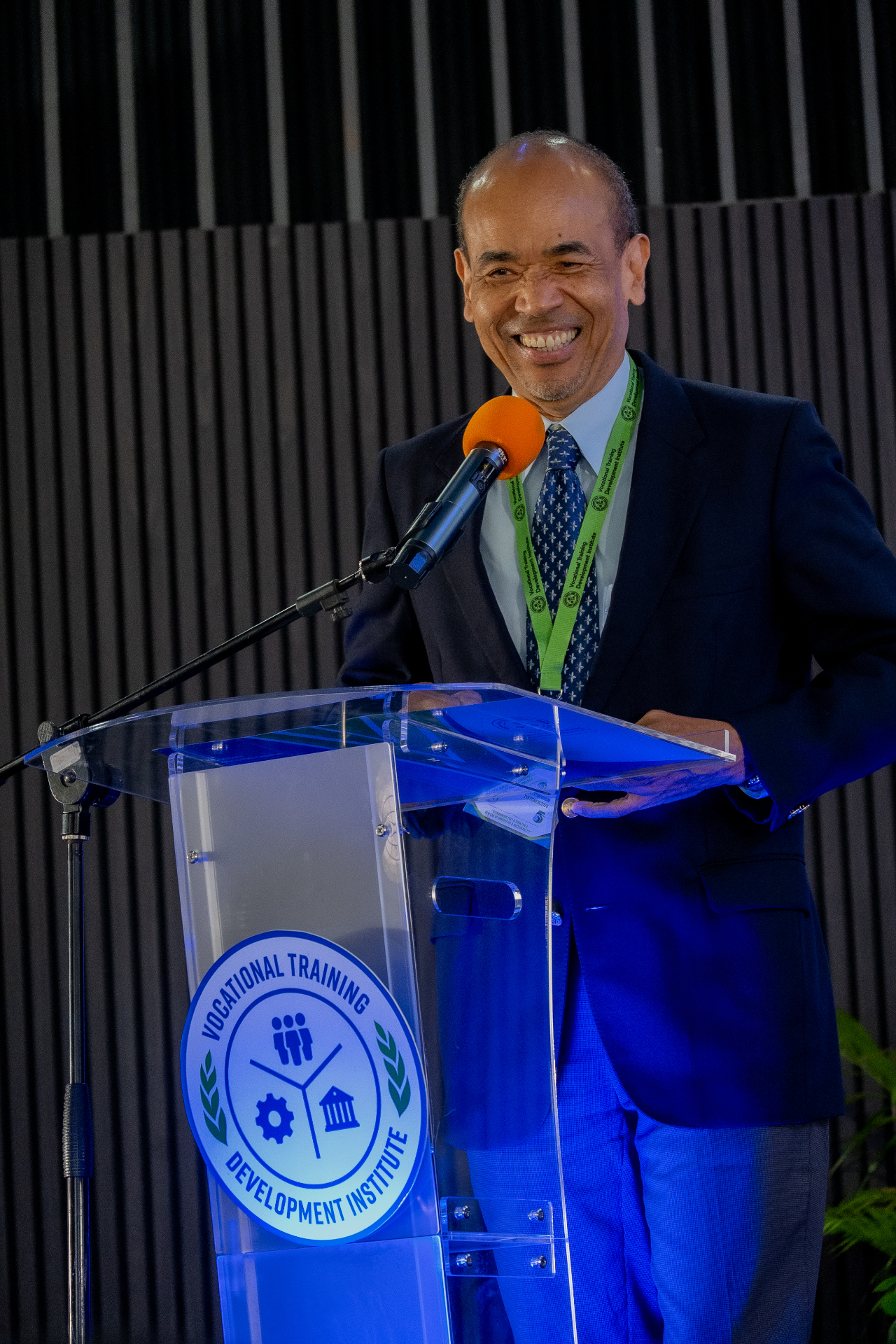
There are very few thought leaders in the Jamaican space that can hold the attention of a room at pin-drop level for more than 45 minutes. Wayne Chen, the president of the Jamaica Employers Federation, is certainly one of them. His fastidious knowledge of our local labour market and the global economic and technological zeitgeist was out in full force recently at the TVET Symposium hosted by the Vocational Training Development Institute here in Kingston.
Mr. Chen's keynote was a clarion call warning that the future is arriving faster than we are currently responding here in Jamaica. His most poignant comment in this regard was: "My fear is writing a speech, putting it in black and white, and by the time I come up here to deliver it, the world has moved on." He also went on to say, "Only forty percent of our workforce has certified skills. We are not going to build a prosperous future on such a low-skill workforce."
Essentially, what we have in our land of wood and water is not a future problem. It is a present mismatch. Let us narrow our focus on two future-focused sectors that demand a high level of skilled labour: the energy transition to renewables and the EV revolution that China is leading.
Looking at the pace of renewable energy being added to the global grid, the scale of technological acceleration Mr. Chen referenced becomes truly unmistakable. In just four years, the world has nearly matched what took three decades to build — between 2021 and 2025, global renewable capacity additions approached 2.5 to 3 million megawatts, the same range as the total installed between 1980 and 2020.
"Over the next three years," Mr. Chen would further state, "hundreds of megawatts of new renewable energy will be installed in Jamaica, and that requires specialized skills and a whole ecosystem." Hence, the never-ending debate: will we make it to 50% renewables by 2030 with only ambitious policy and the absence of a serious investment of will and financial alacrity for at-scale training of our populace?
Matching this trend is the current EV transition. They are not singular trends — they are threaded into one powered cable of consistent disruption. The EV transition took centre stage as Mr. Chen acknowledged the presence of the CEO of one of the island's dealers in hybrid and electric vehicles, sharing his pride in Mr. Andrew Jackson's vision as JETCON has made significant effort to focus on the transition from ICE to hybrid and electric.
Do we have enough subsidies, tax incentives or infrastructure incentives to drive this effort? Are we leaving the market — and solely the market — to drive the scale of adoption needed? "For the whole ecosystem to support tens of thousands of EVs that are expected to be on the streets of Jamaica in 2030," Mr. Chen posited, "we are going to require a lot of people with the skills to support it." It's not just about training a couple more technicians to service EVs. It's about preparing a competent and capable workforce, at scale, capable of building and maintaining the infrastructure required to power an entirely new economy.
Europe alone has seen a rocketing 51% increase in EV sales since March 2026, while Australia has seen a 42% jump in the same period. These radical shifts in market behaviour are absorbed because the infrastructure exists to deliver the support needed. How will Jamaica respond to this new world order?
If we are to take Mr. Chen's presentation seriously, we will accept that this is an urgent moment, an unavoidable moment, but also a moment in our history pregnant with possibility. Speed, scale, will and intention are needed in copious amounts, from every corner of our society. We may hold records on the track — but we are simply not going fast enough.
Research, Innovation, and the Future of TVET
VTDI's recent symposium brought together researchers, educators, administrators, industry voices, and emerging practitioners for a dynamic day of knowledge-sharing, reflection, and innovation. With a programme that moved from formal presentations to interactive exploration sessions, the symposium highlighted VTDI's growing role as a space where research, technology, creativity, and workforce development meet.
The day opened with greetings from institutional and sector leaders, including Dr. Delize Williams, Principal of VTDI; Professor Halden Morris, VTDI Board Chairman; Dr. Tamika Benjamin, Assistant Chief Education Officer, MoESYI; and Dr. Kevin Brown, President of UTech Jamaica. The keynote address was delivered by Mr. Wayne Chen, setting the tone for a day focused on the relevance of education, innovation, and national development.
Across research sessions, presenters explored timely issues affecting TVET and higher education in Jamaica — blended learning in competency-based programmes, artificial intelligence in the creative process, online practicum assessment, STEM and STREAM education, entrepreneurship and industry synergy, employability outcomes, trauma-informed pedagogy, green skills, and the use of AI tools such as Claude in ICT instruction.
Afternoon sessions extended beyond traditional formats with roundtable discussions on machine learning, generative AI in blended TVET delivery, and artificial intelligence for inclusivity. Hands-on exploration in digital illustration, motion capture, animation, and emerging digital technologies allowed attendees to experience the practical side of innovation.
Though held as a one-day event, the symposium carried significance beyond the day itself — demonstrating VTDI's commitment to advancing research capacity, strengthening professional practice, and preparing educators and learners for a rapidly changing future.
A Day in Frames

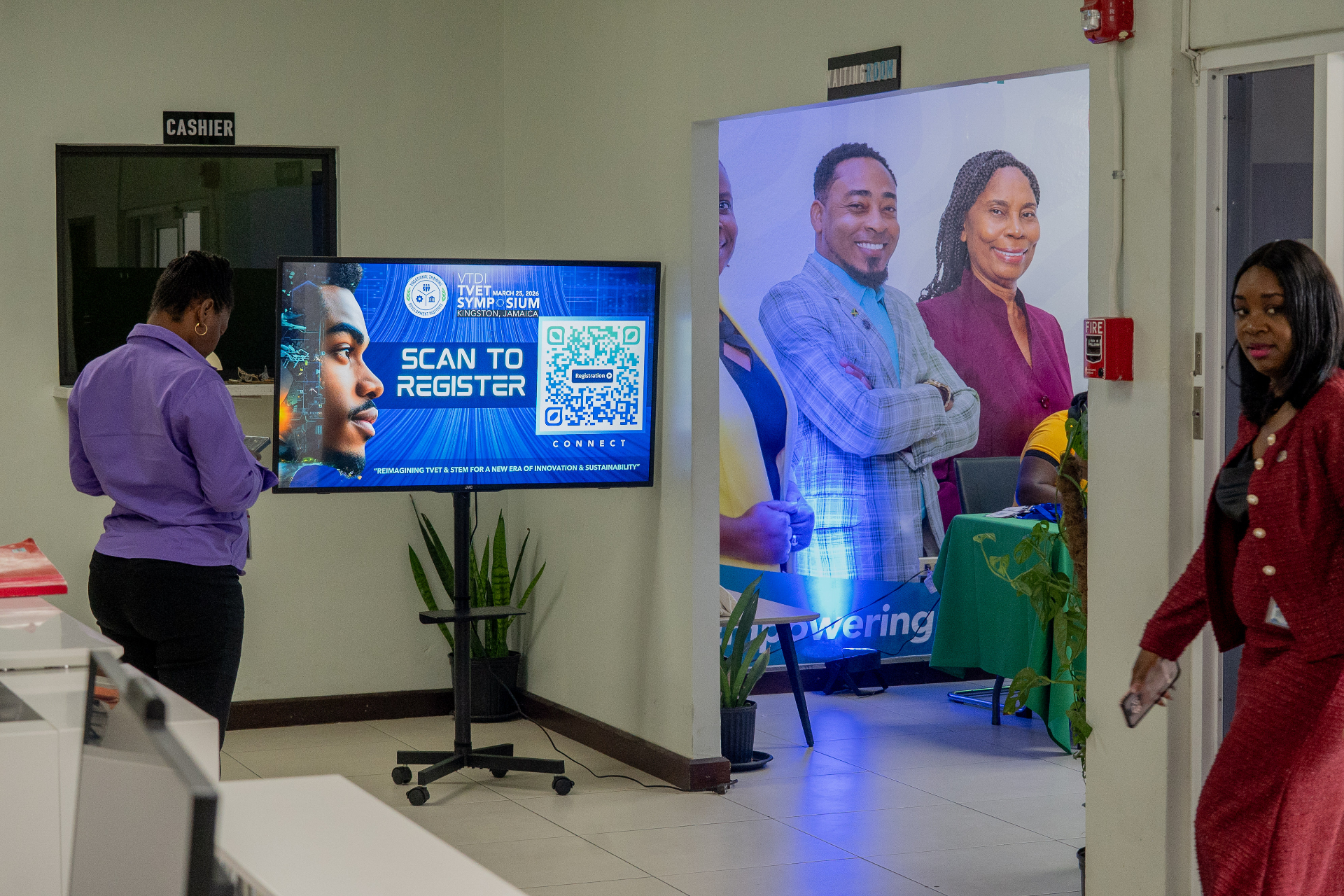

TVET Quest: Turning Passive Events into Active Adventures
TVET Quest is a gamified mobile-web engagement platform built to transform symposium attendance from passive listening into active participation. Attendees compete in a quest-style challenge system, earning points for completing real-world tasks — scanning QR codes hidden around the venue, snapping group selfies, reflecting on keynote sessions, and networking with fellow participants.
A live leaderboard drives friendly competition, while an admin review dashboard lets organisers verify photo and text submissions before awarding points. The platform features role-based access control, real-time scoring, and deep-link QR flows that guide attendees directly into specific challenges.
Built on React with a Lovable Cloud backend, TVET Quest serves as both an engagement tool and a proof-of-concept for event-tech gamification — demonstrating how even a lean MVP can turn a standard conference into an interactive, memorable experience.